Electric Road System Investor Content
ERS (dynamic power transmission via overhead lines, induction coils beneath the asphalt, or conductive rails embedded in the asphalt) can benefit society in numerous ways:
- Eliminating range anxiety without relying on lithium
- Smoothing out energy demand over time and greater grid stability
- Less need for energy storage and additional nuclear power plants
- Faster rollout compared to static charging due to fewer required grid connections
- More cost-effective overall than static charging, thereby also reducing the burden on taxpayers
But: Unfortunately, Germany has historically been an unfavorable pilot country in this regard, both politically and due to its hesitant mindset. This is particularly unfortunate, as Germany is the country in Europe with the highest market potential.
The analyses below shows that ERS should also be a no-brainer for investors from a financial standpoint - provided that policymakers don’t stand in the way, after failing to promote this clean solution in the first place.
Interactive cost comparison tool - static vs dynamic charging
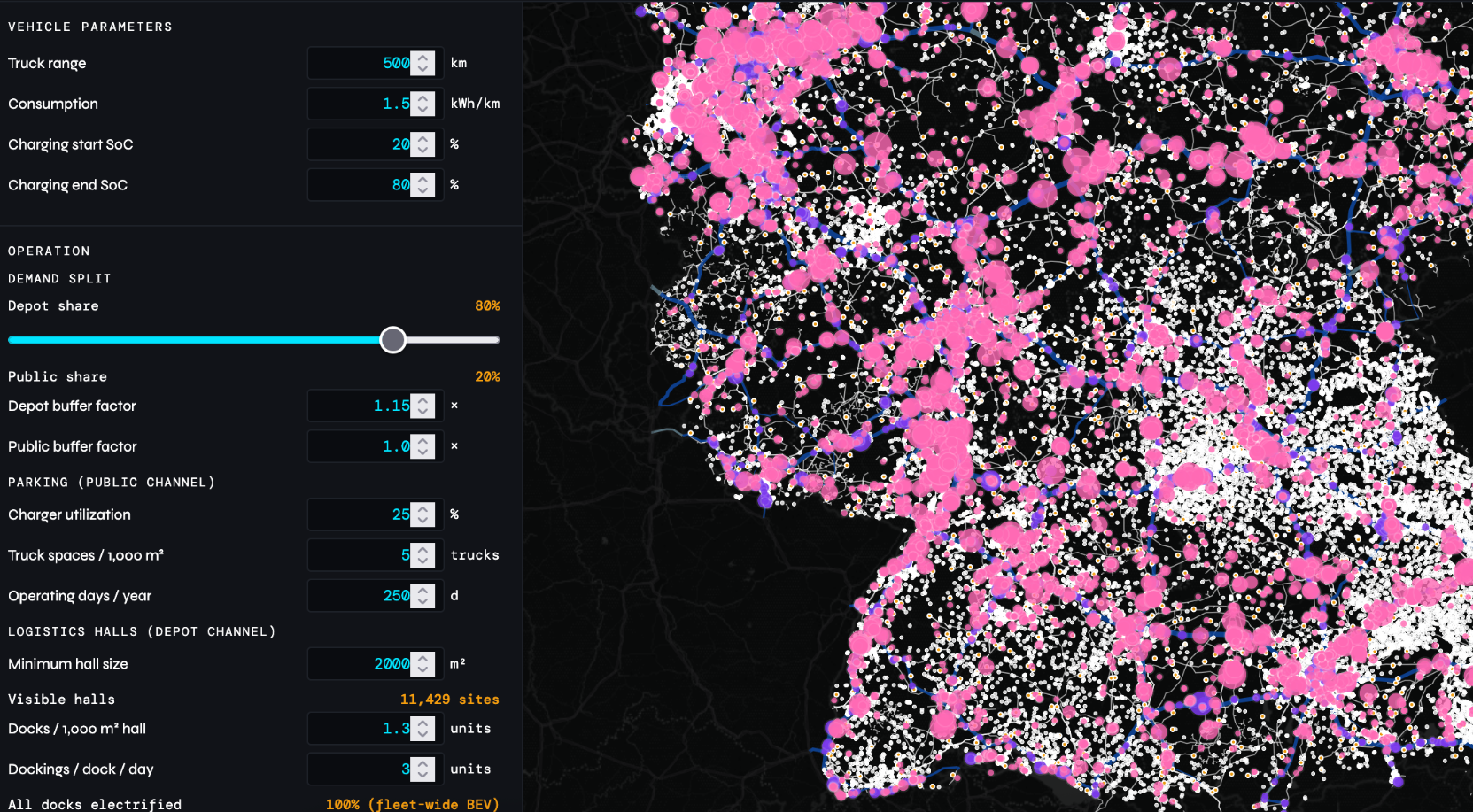
ERS are often considered too capital-intensive. However, on heavily trafficked corridors, the opposite is true. Using this interactive tool, you can calculate the costs of static truck electrification based on your own assumptions and compare them to the ERS cost benchmark using a euro-per-kilometer conversion.
Investment Case from the Perspective of an Infrastructure Operator
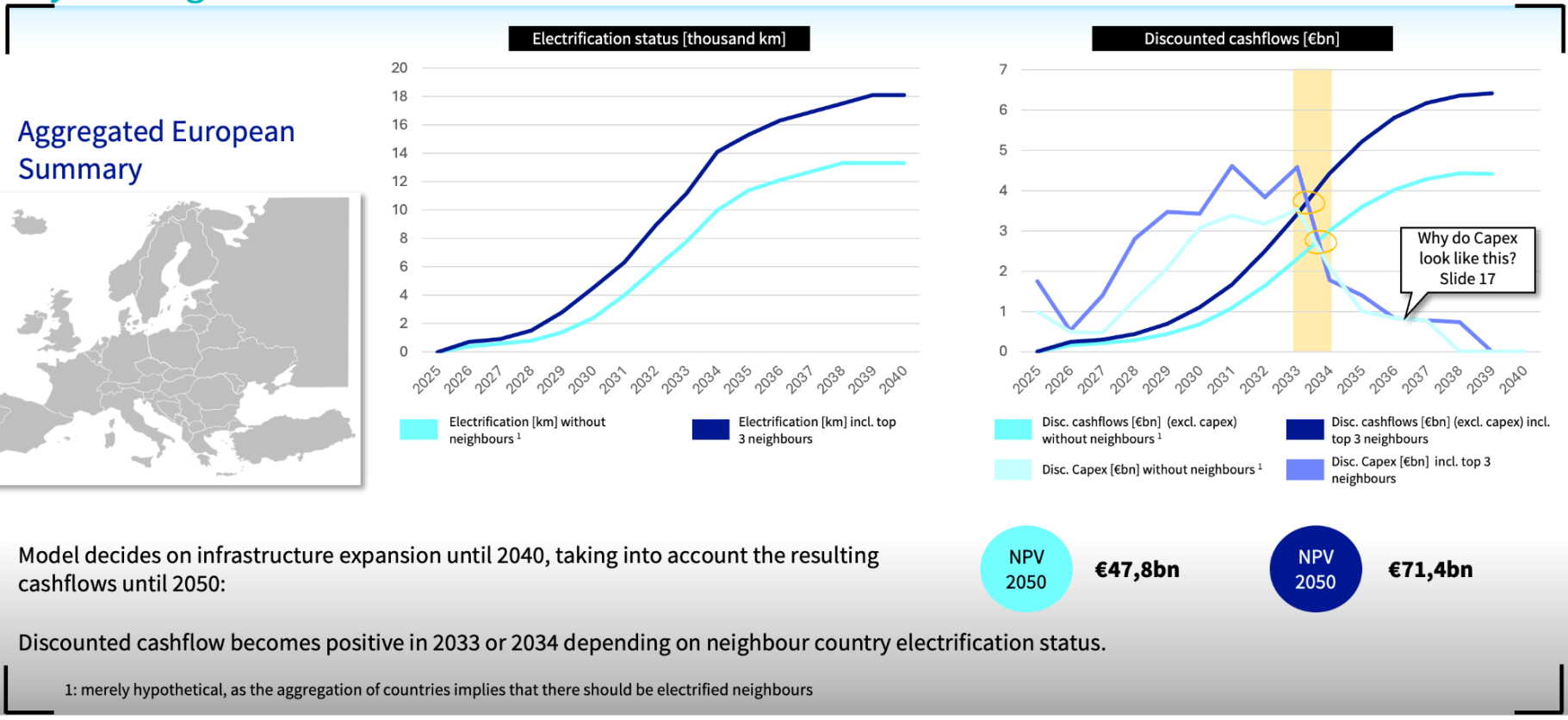
The Excel tool behind the link can be used to calculate the NPV for several European countries based on an optimal expansion path. It is designed according to standard financial modeling, but includes the option for mathematical optimization using dynamic programming - "time traveling backwars" (via VBA).
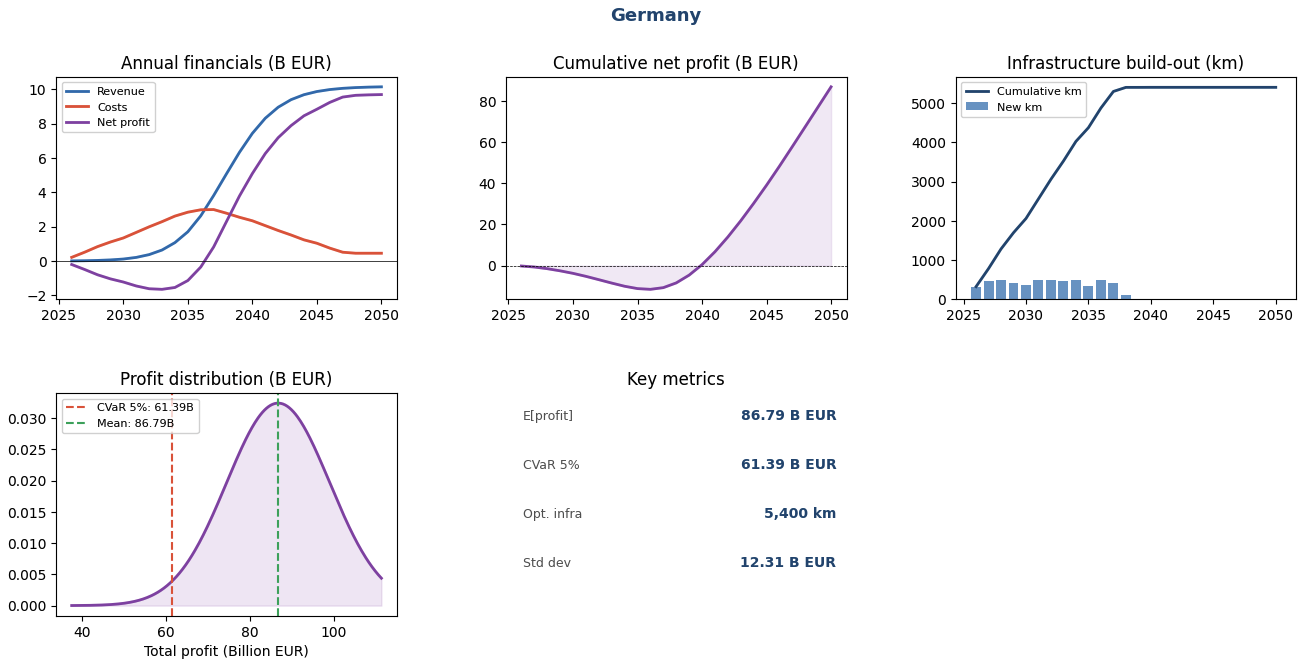
Of course, ERS face significant uncertainties:
How will electricity prices evolve?
How will market diffusion evolve depending on the existing infrastructure?
All you need to tackle all these uncertainties you will find below. No programming knowledge required. Just click the run button(s), customize the dashboard inputs and experience the magic of mathematical optimization.
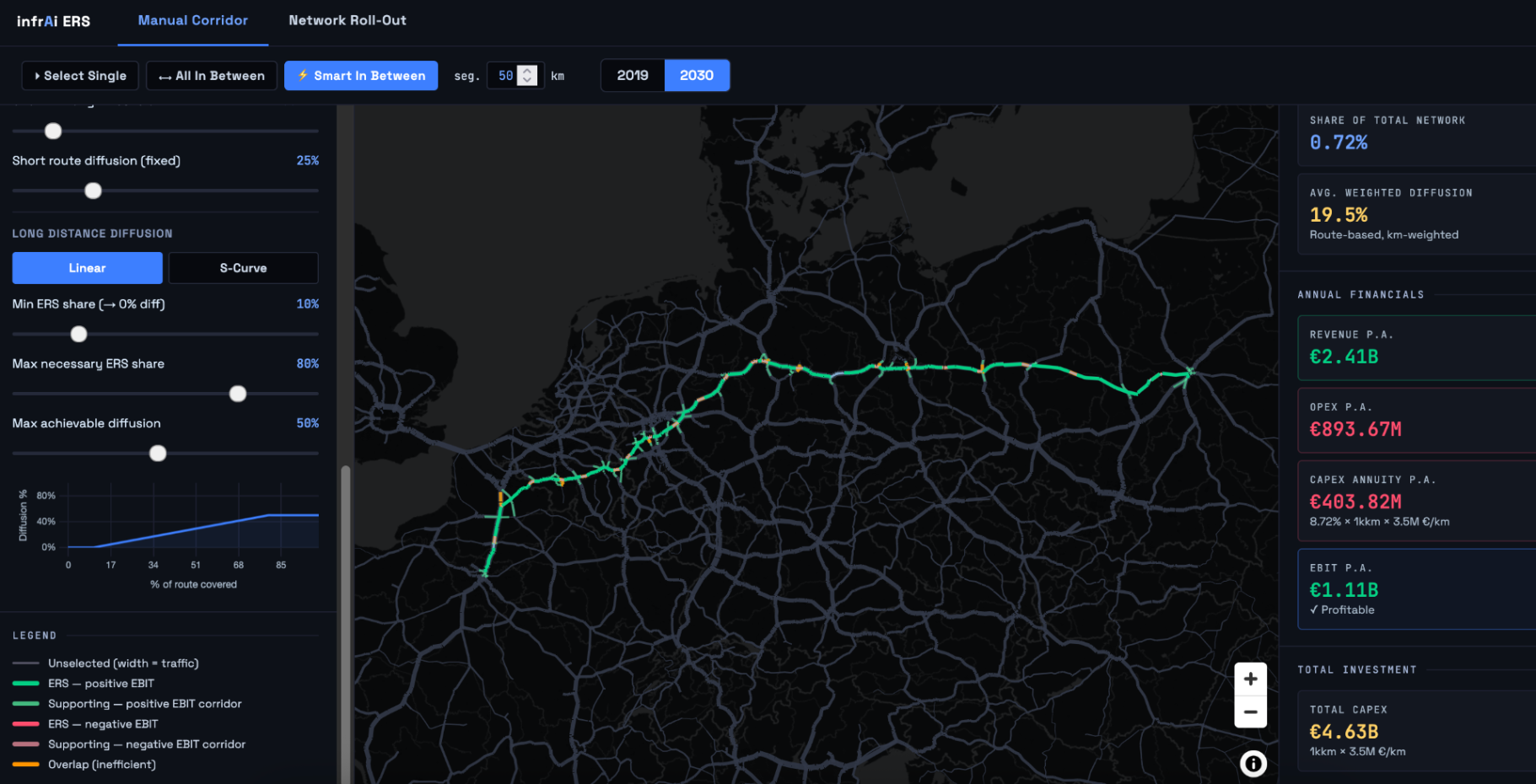
If you'd like to dig deeper and analyze profitability at the edge level based on specific routes and their market diffusion, check out the short video on the corresponding tool.
Fleet Optimization from a Fleet Operator's TCO Perspective
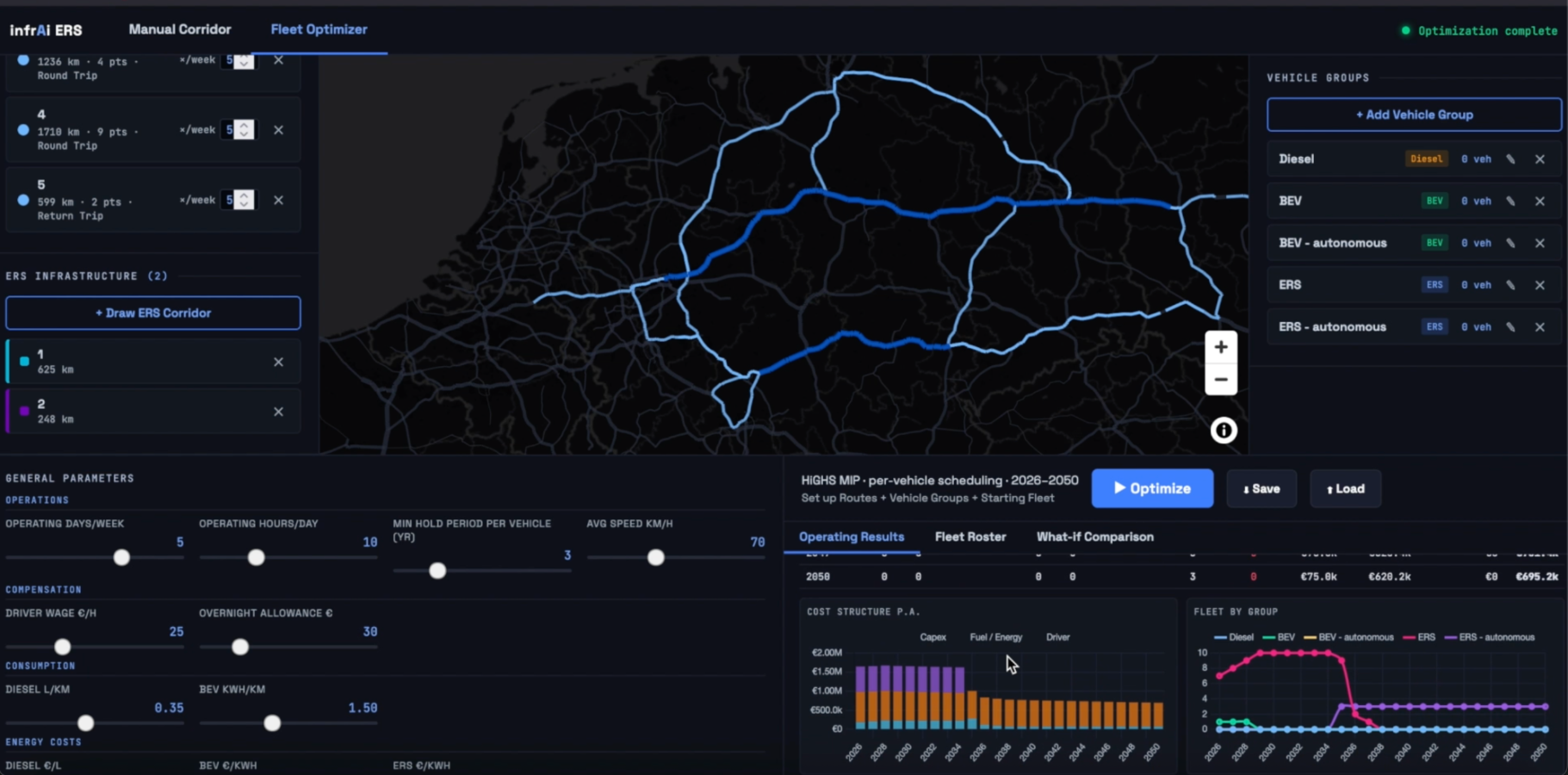
Which ERS corridors would be most beneficial for my top routes?
Find out when you should buy which type of vehicle (Diesel/BEV/ERS) and how to optimally allocate your fleet on your routes.